Tuesday, September 18, 2012

Preserving Summer, Making the Good Stuff Last


I've been on quite the hiatus around here, but it's been in the cause of some very Good Stuff: a new native Californian, my baby girl. So it happened that soon after starting this blog I had to give up wine for a while. However, I've taken the opportunity to enjoy bounty of a non-alcoholic kind, cooking and eating lots of fresh produce. It turns out cooking for a baby is not that hard, and actually inspires me to eat more fresh, simple fruits and vegetables. It also keeps me motivated to use organic produce as much as I can, despite the expense. But more on those topics another day.
            Today, I am savoring the last slow, warm weeks of summer. And for this first time, this year I am trying my hand at some simple preserving, to make the bounty last for months to come.
            My first attempt, a true baby step, was in the spring. I have a peach tree and apricot trees in my yard -- they were here when we moved in to the house, and each year since then I have struggled to make the most of the abundance of fruit, baking cobblers and making ice cream and eating them right off the tree, spreading the gospel of real ripe, honey-flavored apricots (a completely different animal than the tart ones you find in a store), and giving away bag fulls  to anyone who would take them. In the end I always end up with a mess of rotten, sad fruit. All that goodness gone to waste. So, as the peach and apricot season seemed to be trailing off, and no one would accept another bag of almost-overripe fruit, I decided this year I would not fail. I sliced up the fruit (peeling the peaches first) and simply put them in freezer bags, about a cobbler's worth in each, and laid them flat in my little freezer. I'm looking forward to a fragrant, warm peach cobbler in October.
Just add sugar, spices, and a crust.
            Well, that worked pretty well. What else could I preserve? I enlisted my mother's help, and we transformed half a flat of strawberries from the farmer's market into beautiful ruby-red freezer jam. It's really a simple process, no hot water baths or special tools, but I was still a bit daunted -- I used the same recipe my mother and grandmother used, and I remember them sometimes getting runny batches. Perhaps I had beginners luck (or was it those magical strawberries?), because this jam is perfection. The fruit isn't cooked, so the flavor is intensely fresh and sweet. It's like sugary red sunshine. The only problem may be making it last until next summer.
Sunshine in a jar
            Making jam was a big step -- almost like "real" canning -- but also a comfortable one, since my mother has made it almost every year since I was a child. Next it was time to step into uncharted territory.
            In my wild domestic ambition, I planted tomatoes this year -- another first for me. I love a good little cherry tomato, sun-warmed and candy-sweet right off the vine, and I wanted to try my hand. But, I should have remembered the lesson of the peach tree: eating a few tomatoes now and again didn't prepare me for the onslaught my plant is throwing at me! Again I gave some away, but as the tomatoes piled up on my counter, I knew I had to do something.
            I turned to my most trusty cookbook, Deborah Madison's Vegetarian Cooking for Everyone. The recipes are wonderful, ranging from plain (What is this vegetable and what do I do with it?) to fancy (her apple galette with candied lemon slices is wonderful for Thanksgiving dessert). Best of all, though, is her encouraging commentary throughout the book -- personable and wise.
            Pasta sauce seemed like a workable way to use up a lot of tomatoes, although I've never made it before and wasn't sure how well it would freeze. Lo and behold, her margin comments included her tip for freezing tomato sauce: in freezer bags, portioned to meal-sized amounts, laid flat on the freezer floor. Just like my peaches. I felt I had made a connection with my hero chef, and achieved a new level in this quest to understand and enjoy good food. I will count this summer a success.
First attempt at pasta sauce from scratch
            I seeded and quartered the tomatoes, snipped in some fresh basil leaves, put a lid on and simmered it for about 10 minutes. Then I added some salt and pepper and some California olive oil, used an immersion blender to puree it, and I had made my first tomato sauce, adapted from Madison's "Fresh Tomato Sauce" recipe.
            To the portion I set aside for that night's dinner, I stirred in some pressed garlic and and freshly grated parmesan. I spooned it over tender pasta, topped it with broiled, peppered chicken. And then -- I ate it.
            And it was good.  

Wednesday, November 2, 2011

It's the Marketing, Dummy

Here in California, we tend to think about global warming a lot. But one thing I hadn't thought of: how will it affect California wines? And when?

According to this article on National Public Radio today, the change is already happening, especially in that hot bed of California wine innovation, UC Davis. Even a very small change in temperature could decrease the size of our wine growing region dramatically, at least based on the mostly French varietals that are king in California. Wine growers will need to adapt within the next half century if they are going to continue producing.

So, the choice seems to be: Should we breed more heat resistant varieties of grapes uniquely suited for California? Or, should we look beyond the big-name French varietals to explore lesser-known grapes from the hot regions of Spain and southern Italy?

In either case, the biggest problem for wine growers and vintners is the consumer. We've been trained to look for pinot noir, chardonnay, and cabernet sauvignon. I don't think they tasted any negroamaro or babera in Sideways. They're not at the top of the list in California Wine for Dummies. And newbies and wine snobs alike might be hesitant to invest in entirely new varieties of wine bred just for California.

But think back a couple of decades. Just like no one knew a macchiato from a cappuccino before the early 1990s, not many people could tell the difference between a pinot grigio and a sauvignon blanc before the late 1970s. But little by little, person by person, tasting room by gourmet boutique -- now we do.

Building up new vine plantings takes time and money, and shaping public opinion about wine could take even more. But it sounds like we have a few decades to turn this ship. I don't know about you, but I am excited to keep exploring new wineries and learning about new varieties. I haven't tasted a negroamaro yet, but I look forward to getting the chance sometime soon. Perhaps some innovative agriculture and delicious new wines will be a bright spot among the challenges of climate change.

Wednesday, September 7, 2011

Lesson from Ventura

We interrupt this radio silence to bring you today's food lesson from the Central Coast, specifically from the oft-underrated town of Ventura, right on the southern edge of the region.

If a friendly Hispanic man comes to your door selling fresh tamales, made by his wife, out of an cooler that he's carrying door to door -- GET SOME. You won't be sorry.

This has been yet another example of the Good Stuff that makes California great. Squire Rose, over and out.

Wednesday, April 27, 2011

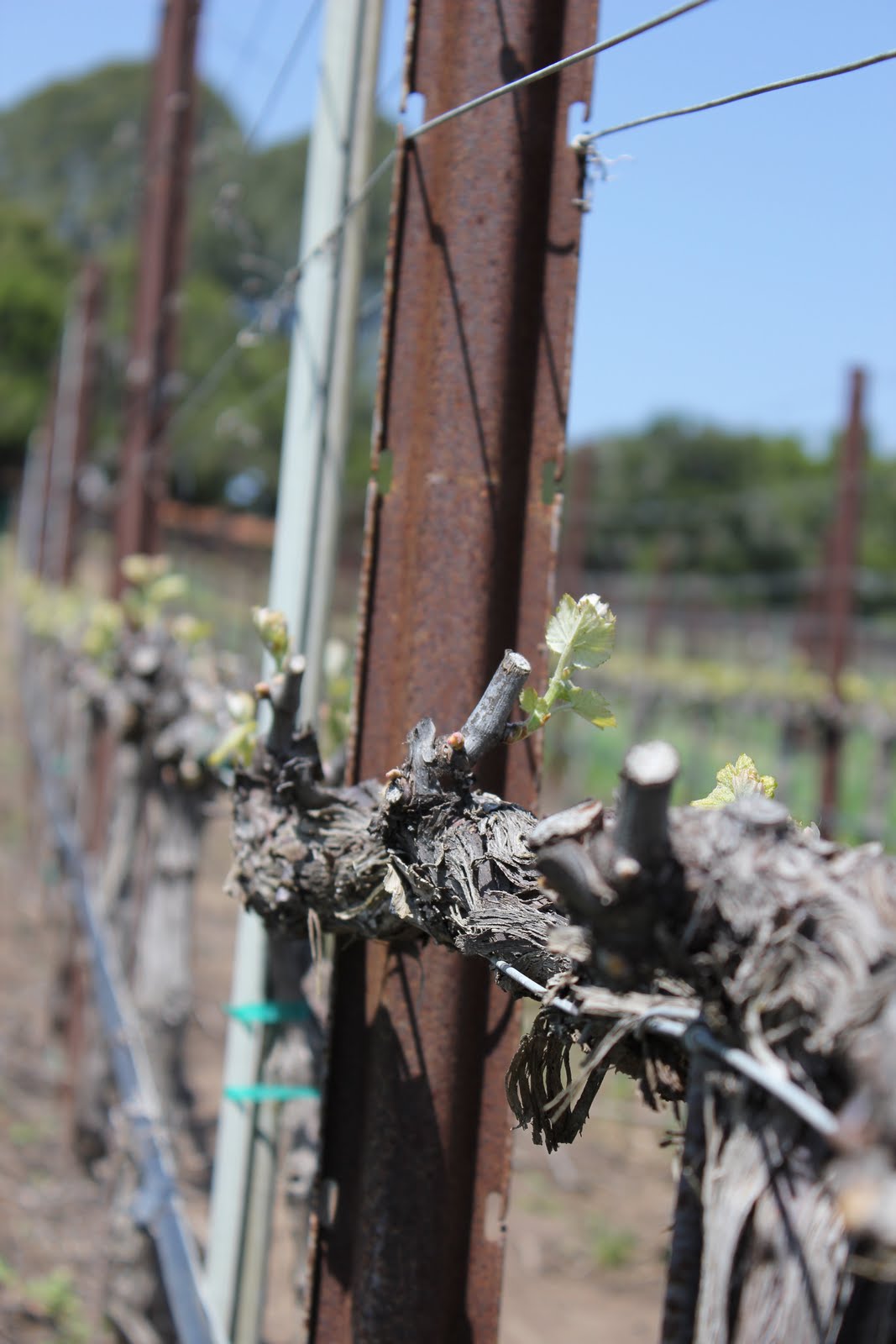
Spring Time in the Vineyard

Springtime is passing in a whir, as it is want to do. Today I read a chapter in Barbara Kingsolver’s wonderful Animal, Vegetable, Miracle about how eating seasonably means getting the good stuff while you can – I’ve been so busy doing that, that I haven’t written about it! So here is a slightly overdue look at what spring looks like in the vineyard.


Earlier this month the winemaker at Rusack Vineyards, John Falcone, was so kind as to meet with me and talk about what goes on in the vineyard and the cellar at this time of year. We first talked about the idea of eating seasonably and locally, and I realized that in some ways my interest in local food really sprang from my fascination with local wines. It’s the same model of a small-scale farm making quality products and selling them directly to the consumer. Culturally we tend to separate growing produce from growing wine – as Falcone put it, many vineyard owners get into the business with images of a glamorous, leisurely lifestyle in mind, but basically, he says, it’s farming.


Moreover, “wine is part of the table, to me. The two go together. The best wines need food to bring out their character.” (It seems inherently true, but that’s a surprisingly rare notion in this country; in one study cited in the Smithsonian’s Food & Think blog, only 46% of wine was consumed with a meal!)

But Falcone is well positioned to take a broader view of such things. One of the wonderful things about a relatively small winery like Rusack is that he personally takes the wine through every step of the way, from budding to bottling – in a larger operation, each worker may deal with only a few myopic aspects of the process. Other winemaking staff at Rusack include one assistant, Steven Gerbac, plus John’s wife, Helen Falcone, who keeps them organized. A few seasonal workers are brought on to help with harvest and bottling. Seasons in the vineyard and in the actual winemaking process run on different cycles, and Falcone oversees them both.

Rusack winemaker John Falcone
He starts each vintage by working closely with a vineyard management company, to ensure the grapes develop just the way he wants. That is, as much as nature will allow. The weekend before I visited, temperatures in Ballard Canyon dropped below freezing for several hours. The tender new growth was protected by spraying it with water; the ice counter intuitively protects the plants from getting any colder.


In a couple of months the vines will flesh out with lush green leaves and clusters, and the canyon will become one of the most beautiful places in the world to sip wine. Then in the fall, when the grapes have developed a complex flavor and just the right amount of sugar: Harvest, and the beginning of the winemaking season. Falcone and his crew are busy from September to early spring with the crushing, fermenting, barreling, racking, and tasting. Now that the cellar is somewhat calmer, he will spend the spring finalizing plans with the other vineyards they will buy grapes from this year, and working on developing sales contracts to get Rusack wine into restaurants throughout the state.

Which brings us back to food. Falcone cut his winemaking chops in Napa, just as that region was exploding into the gourmet mecca it has become. Similar to my own experience, Napa’s taste for fine local food followed its taste for wine. Falcone says he’s beginning to see that in the San Ynez area – which means we can look forward to more good stuff to come. 

Sunday, April 10, 2011

That's the Good Stuff

Here is the story of the blog’s name. It comes from a Western movie that I grew up watching and that has, apparently, had a sizeable impact on my unconscious mind. Directed by Lawrence Kasdan, “Silverado” is a classic hero story: four down-and-out cowboys become friends and save a small town from a family of greedy, cow-rustling baddies.

It might be a good time to mention that, not only did I spend my formative years among working cattle ranchers 45 minutes from anywhere, but some of my ancestors arrived on the West Coast as early as the 1840s -- this sort of story is literally in my blood. It’s cheesy and idealistic, but that is the myth of the Great American West, and I love it.

There’s a scene in which Paden, new in town and lover of a good saloon (played by Kevin Kline), talks with Stella, who runs the place (the inimitable Linda Hunt). Paden picks up an unmarked bottle and asks, “What’s this?”
            “That’s the good stuff.”
            “Yeah? How good?” He pours out two glasses and they raise a toast. “Here’s to the good stuff,” he says.
            “May it last a long time.”

I’ll toast to that. Upcoming good stuff on this blog will include: a trip to Rusack Vinyards to see what the winemaker’s up to this time of year, a whirlwind tour of 12 wineries in Santa Barbara County, some thoughts about California native plants, and soon, I hope, a visit to Watkins Cattle Company, where grass-fed beef is raised just a few miles from my home.

Cheers!

Saturday, April 2, 2011

The Right Place at the Right Time

I am no wine snob.

I’m not an industry insider, I’m not an aficionado, I’m not on any wine label’s payroll. But what I am is curious, and in the right place at the right time. I live at the southern tip of California’s Central Coast, one of the most exciting places in the world for local food, artisanal cheese, and small vineyards making exceptional wines. There is a lot of energy here, with new ideas and communities around every corner. You can hardly walk outside without running into a small farm or a beautiful new wine tasting room. There are places to taste local olive oil and honey, and all year round there are festivals celebrating avocadoes, lemons, lavender, and of course wine.

I’m out to learn all I can, to taste and listen and read, and share it all with you here.

We have a banquet of good stuff before us, so let’s dig in –

__________________

In a couple of weeks I’ll be exploring a nearby wine region at the Santa Barbara County Vintners’ Association 2011 Festival Weekend. There are more than 110 members of the Association, showing you just how wine-rich this area is! It’s got me thinking about what sets each wine region apart, so it’s a good time to tackle one of the big words in wine culture, appellation.

You can’t get too far in a conversation about wine before you encounter that ominous word. It’s clearly a word that wine people care about – they argue about whether it is the essence of fine wine, or if it is un-American; they form committees and lobby government officials about it; they throw it into conversation and expect that you should know what it means; and, handy for us, they write books about it. Here, in a nutshell, is a layman’s guide to help you join the conversation.

“Appellation,” like most wine jargon, is a French term. The word means “name” or “designation,” and refers to where a wine comes from. Champagne comes from the Champagne area, burgundy wines come from Burgundy, Rhône wines come from the Rhône Valley region – you get the idea. Incidentally, that’s why champagne-style wines grown in California or anywhere else are called “sparkling wine;” it’s not champagne unless it was grown in Champagne.

The thing is, people have been growing and making wine in France for so long, they’ve worked out exactly what grapes work best in each area, and they’ve refined their winemaking techniques over many generations. That means that for French wine, the appellation doesn’t just tell you where it’s from, but give you a lot of information about both the variety of grape, and the distinctive flavor characteristics of the wine. It tells you about the “terroir” – but I’ll save that bucket of worms for another day.

In the United States, we have a bit of a different system. You’ll hear about wine coming from a certain “AVA,” which stands for American Viticultural Area and is simply an area recognized as a wine-growing region by the federal government. Within any given AVA, there may be a spectrum of wine varieties grown, with no one style being typical of the region.

Some winemakers see this as a great thing, an example of the American spirit of adventure and experimentation – “If we can grown Spanish whites and Rhône reds and sparkling Pinot all within a few miles of each other, why shouldn’t we? Variety is the spice of life!”

Other wine aficionados see it as a mark of the immaturity of winemaking in the Unites States. After all, we’ve only be making “fine wine” (as opposed to bootleg hooch) on a broad scale since the mid-20th century, with our first wines being internationally recognized in the late 1970s. Such critics would like to see wine makers pay more attention to the unique characteristics of each region (that’s the “terroir” again), and carefully develop flavors in the wine that are distinct to a specific area.

In his book New California Wine (Running Press, 2004), Matt Kramer argues that for a long time Americans were more intrigued by the chemistry and technology of the wine making – everything that happens after the grapes are harvested – than in the slow, artful process of developing distinctive vineyards. After half a century of fine winemaking, however, he’s starting to see more attention to an “appellation” way of thinking, working with the land to make recognizable, region-specific wines.

So, appellation: outdated French word, or the heart of good wine? What do you think?